
India may have to lean more on West Asian nations for supplies of liquefied petroleum gas (LPG), a cooking fuel, in the coming years after Indian state-run refiners drew up big plans to diversify into producing more profitable petrochemicals. This shift leads to reduced LPG output, Indian refining executives said. The mantra for state-run oil companies, from Indian Oil Corporation (IndianOil) to liquefied natural gas (LNG) importer Petronet LNG, which are looking to diversify their businesses from lower-margin fuels, has been value-added petrochemicals.

India plans to release about 5 million barrels of crude oil from its emergency stockpile in tandem with the US, Japan and other major economies to cool prices, a top government official said on Tuesday. India stores about 38 million barrels of crude oil in underground caverns at three locations on the east and west coast. Of this, about 5 million barrels will be released, starting as early as 7-10 days, the official, who wished not to be named said.

At least half a dozen national and international oil giants, including Reliance and Royal Dutch Shell, joined the race, on Friday, for acquiring government's 34 per cent stake in Hindustan Petroleum Corporation Ltd.

Dividends paid by central public-sector enterprises (CPSEs) in 2024-25 are set to be the highest ever, with the government receiving 69,873 crore so far. A government official said he was hopeful the receipts would touch 70,000 crore in the last week of the financial year.

Indian Oil Corporation (IOC) on Tuesday reported halving of its March quarter net profit largely because of losses in the petrochemical business and shrinking margin after it announced a pre-election fuel price cut despite rising input costs. The net profit of Rs 4,837.69 crore in January-March compared to Rs 10,058.69 crore a year back and Rs 8,063.39 crore in the preceding October-December quarter, according to a stock exchange filing by the company.
Officers of India's third largest oil firm Hindustan Petroleum Corp on Thursday began an indefinite agitation against "arbitrary and autocratic" style of company management.

Truck drivers protesting against a provision in the new penal law on hit-and-run road accidents, called off their strike in Nashik district of Maharashtra on Tuesday after the local authorities assured to look into their demands.

Brokerages expect a further slowdown in Indian firms' revenue and earnings growth in Q4FY25, following low single-digit growth in the preceding three quarters, as factors like weak consumer demand and credit growth linger on.
Workers of India's third largest oil refiner Hindustan Petroleum Corporation Ltd have decided to go on an indefinite strike from January 15 to protest against campus recruitment of new staff and "autocratic" management.

Moody's Investors Service on Wednesday raised the rating outlook for 18 Indian corporates and banks, including Reliance Industries, Infosys, SBI and Axis Bank, to 'stable' from 'negative'. This follows the upgrade by the US-based rating agency in India's sovereign rating outlook to 'stable' from 'negative' on Tuesday. The agency had affirmed the sovereign rating at 'Baa3'.

State-owned Indian Strategic Petroleum Reserves Ltd (ISPRL), which operates India's strategic crude oil storage, will make awards by December to lease around 1 million tons of crude oil storage space (7.3 million barrels) at two of the country's three existing Strategic Petroleum Reserves (SPRs), around a fifth of the total SPR capacity. This will enable the refilling of crude caverns even as escalating hostilities in the Gulf threaten disruptions in crude supplies, two industry sources said.

The market responded positively to the Q1 results of oil marketing companies (OMCs), Bharat Petroleum Corporation (BPCL) and Hindustan Petroleum Corporation (HPCL) despite numbers being weaker than consensus. BPCL's reported gross refining margin (GRM) was in line at $7.9 per barrel (bbl) in Q1FY25, which implies marketing margin stood at Rs 4.8 per litre. Standalone profit after tax or PAT at Rs 3,000 crore was down versus consensus due to under-recoveries in LPG business.

Indian Oil Corp is ranked highest at 161st in the Fortune 500 list.

Billionaire Mukesh Ambani's Reliance Jio is India's strongest telecom brand in India, ahead of Bharti Airtel and Vodafone Idea Ltd, according to brand intelligence and data insights company TRA. TRA, formerly Trust Research Advisory, in its 'India's Most Desired Brands 2022' ranked companies according to their brand strength. Reliance Jio topped the telecom category, followed by Bharti Airtel, Vodafone Idea Ltd and BSNL.

'The universe of PSU stocks is huge and diverse.' 'Investors should bet on specific sectors and stocks from the basket as most of them may continue to consolidate after years of outperformance.'
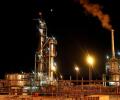
Escalation of the conflict in West Asia between Israel and Iran has had a direct impact on the energy markets, and more broadly on the financial markets as well as the global economy.
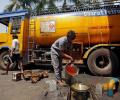
After a spike in crude oil and gas prices in October following the Hamas terror attack, prices eased down 9 per cent month-on-month in November. The Organization of the Petroleum Exporting Countries (Opec) and Opec+ agreed to a further voluntary production cut in January-March 2024 to try and support global crude prices. The best guess here is that crude prices (currently at $75/barrel, or bbl) will not likely cross significantly above $80, and gas prices are also likely to remain subdued unless there's a further escalation in the Israel-Hamas conflict.

Jet fuel or ATF price on Tuesday was hiked by a steep 8.5 per cent - the second increase in a month, while commercial cooking gas rate was cut by Rs 100 per cylinder in line with divergent trends in international benchmarks. Aviation turbine fuel (ATF) price was increased by 7,728.38 per kilolitre, or 8.5 per cent, in the national capital to Rs 98,508.26 per kl, according to a price notification of state-owned fuel retailers. Rates, which vary from state to state depending on the incidence of local sales tax or VAT, have been increased on firming up of global rates that followed four months of decline.
Jet fuel or ATF price on Wednesday was cut by almost 6 per cent after four rounds of monthly increases since July, while commercial cooking gas (LPG) rates were raised by a steep Rs 101.5 per 19-kg cylinder in line with international benchmarks. However, the price of domestic LPG - used in household kitchens for cooking purposes - remained unchanged at Rs 903 per 14.2-kg cylinder. Aviation turbine fuel (ATF) price was cut by Rs 6,854.25, or 5.79 per cent, in the national capital to Rs 111,344.92 per kl from Rs 118,199.17, according to a price notification of state-owned fuel retailers.

IOC protests, says have invested in these facilities over a period of time.

Capital expenditure (capex) by 54 large central public sector enterprises (CPSEs) and five departmental arms with an annual capex target of Rs 100 crore and above has reached around 42.5 per cent of their annual target of about Rs 7.33 trillion in this financial year so far, a senior official from the Ministry of Finance told Business Standard. "The Centre is pushing the big public undertakings in the infrastructure and refinery sector to achieve 90 per cent of their target by the end of the third quarter," he said. The capex by this group of CPSEs stands at around Rs 3.1 trillion in the April-August period so far.
The Supreme Court on Monday adjourned hearing till Friday on a petition challenging the decision of the government to divest its stake in oil PSUs HPCL and BPCL.

The 12-digit unique number that the UIDAI will generate will be combined with the the smart card project of the Oil Ministry for distribution of PDS kerosene and domestic LPG through biometric identification of beneficiaries.

Petroleum and Natural Gas Regulatory Board in its July 2 order imposed a cost of Rs 100,000 on the three private fuel retailers who filed a complaint against Indian Oil, Bharat Petroleum and Hindustan Petroleum for indulging in 'restrictive and unfair trade practices and cartelisation'.

They want more cash, forex, higher bond coupons and increase in market prices for petrol, diesel, LPG.
The government has decided to go ahead with the privatisation of Hindustan Copper Ltd, setting aside concerns over the fate of units, which were partially nationalised.

International oil prices continue to be extremely volatile, falling on one day and rising thereafter, a top oil ministry official said explaining the reason behind no reduction in petrol and diesel prices despite softening in input cost, but could not say if the rates will be cut before Maharashtra elections. Global oil benchmark Brent crude futures fell below $70 per barrel last week -- the first time since December 2021 -- but gained thereafter. Brent was trading at $74.58 per barrel on Thursday while West Texas Intermediate advanced to trade at $71.71.
"There is an alert to intensify security in and around the Bharat Petroleum Corporation Limited and Hindustan Petroleum Corporation Limited refineries following specific information about a possible terror attack," a police officer involved in the exercise told PTI on condition of anonymity.
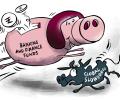
Even as banks and finance companies are reporting record-high earnings, their weighting in the benchmark National Stock Exchange Nifty50 Index has seen a downward trajectory. Investors expect a stronger performance from other sectors in the new year. Currently, banking, financial services and insurance (BFSI) companies collectively hold a weighting of 34.5 per cent, down from 36.7 per cent at the end of December 2022 and a record high of 40.6 per cent at the end of December 2019. This represents the sector's lowest weighting in the index since December 2021 when it stood at 33.7 per cent.

With the government putting off an increase in diesel prices, Petroleum Minister Murli Deora sought an increase in government subsidy to bail out the three oil marketing companies (OMCs). Deora met finance minister Pranab Mukherjee in Mumbai to seek an immediate release of `10,000 crore as interim subsidy to Indian Oil Corporation, Bharat Petroleum Corporation and Hindustan Petroleum Corporation.

Though the government had earlier this fiscal explicitly decided to compensate Indian Oil, Hindustan Petroleum and Bharat Petroleum for the losses they incur on selling domestic LPG and kerosene through PDS by way of oil bonds, the finance ministry has not issued any bonds for the three quarters.

HPCL holds 50 per cent in Prize Petroleum while ICICI Bank has 35 per cent, ICICI Ventures 10 per cent and HDFC Bank 5 per cent.
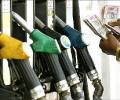
Three fuel retailers -- Indian Oil Corporation, Bharat Petroleum Corporation Limited and Hindustan Petroleum Corporation Limited -- lost about Rs 26,618 crore (Rs 266.18 billion) in revenues on selling petrol, diesel, domestic LPG and kerosene below cost during the first half of the current fiscal, a ministry official said.
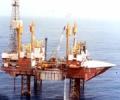
These firms are expected to incur an under-recovery of over Rs 121,000 crore (Rs 1,210 billion) during this financial year, compared to Rs 78,000 crore (Rs 780 billion) in 2010-11.

Nearly 90 per cent of the stocks comprising the National Stock Exchange Nifty 500 Index and 49 of the 50 stocks that make up the Nifty50 are trading above their respective 200-day moving averages (DMAs). The 200-DMA is considered one of the most relevant trend indicators by investors and traders. They believe that stocks and indices trading above this key level exhibit strength and are likely to rally, while those trading below this level are viewed as bearish, with the stock/index expected to see a selloff.
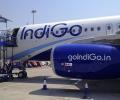
Airfares in the country are set to rise, with IndiGo on Thursday introducing a fuel charge of up to Rs 1,000 based on a flight's distance, in response to the significant rise in aviation turbine fuel (ATF) prices in the last three months. The Indian aviation sector experiences its peak travel season between October and December. The inclusion of a fuel charge component in airfares is anticipated to have a sizable impact on IndiGo's passengers, according to experts.

Russian energy giant Rosneft has appointed a former Indian Oil Corporation (IOC) director to its board in signs it may be looking at boosting trade links with India. G K Satish, who retired as director for business development at IOC in 2021, is one of the three new faces appointed to the 11-strong board of directors of Rosneft, according to a statement issued by the Russian firm. Satish, 62, is the first Indian to be appointed to the board of Rosneft.
